Q.1.
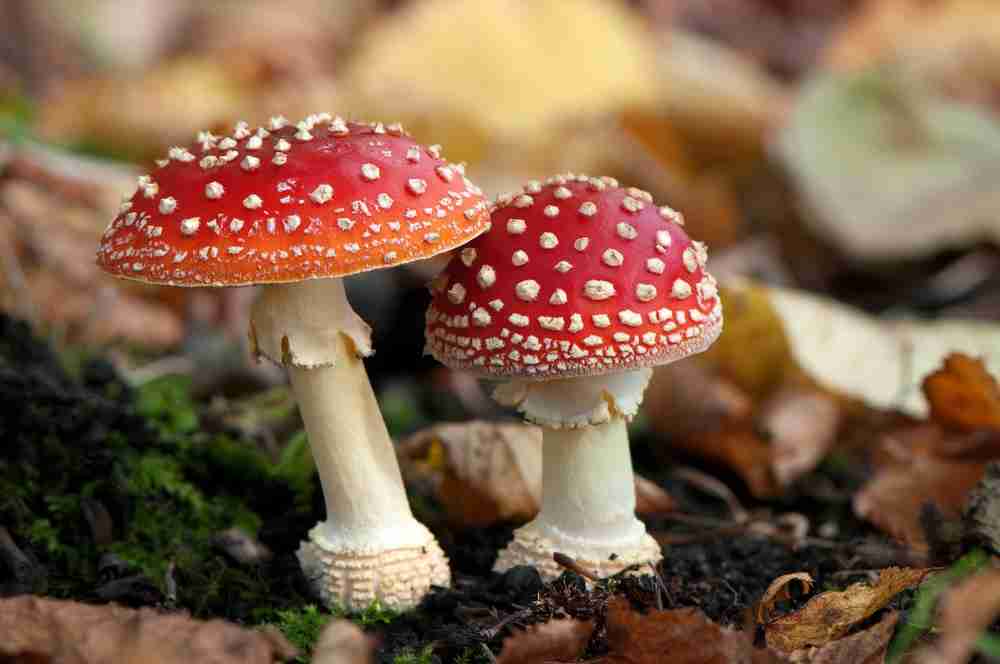
Into which Kingdom would you put this organism?
-
0%
Plant
-
0%
Animal
-
0%
Fungi
-
0%
Bacteria
-
0%
Protist
Q.2.
The two kingdom Classification was Proposed by
-
0%
Whittaker
-
0%
Bentham
-
0%
Hutchinson
-
0%
Linnaeus
Q.3.
The five kingdom classification includes the following kingdoms
-
0%
Monera, Algae, Fungi, Plantae, Animalia
-
0%
Bacteria, Algae, Fungi, Plantae, Animalia
-
0%
Monera, Protista, Fungi, Plantae, Animalia
-
0%
Bacteria, Protista, Fungi, Plantae, Animalia
Q.4.
Fungi was separated from kingdom Plantae and introduced as a new kingdom because fungi i) have cell wall which is made of Chitinii) are mostly unicellulariii) are prokaryoticiv) have heterotrophic mode of nutritionChose the correct combination from below
-
0%
i) and ii)
-
0%
i) and iii)
-
0%
i) and iv)
-
0%
ii) and iv)
Q.5.
Which of the following is NOT the main criteria for classification proposed by Whittaker?
-
0%
Cell structure
-
0%
Mode of nutrition
-
0%
Locomotion
-
0%
Phylogenetic Relationship
Q.6.
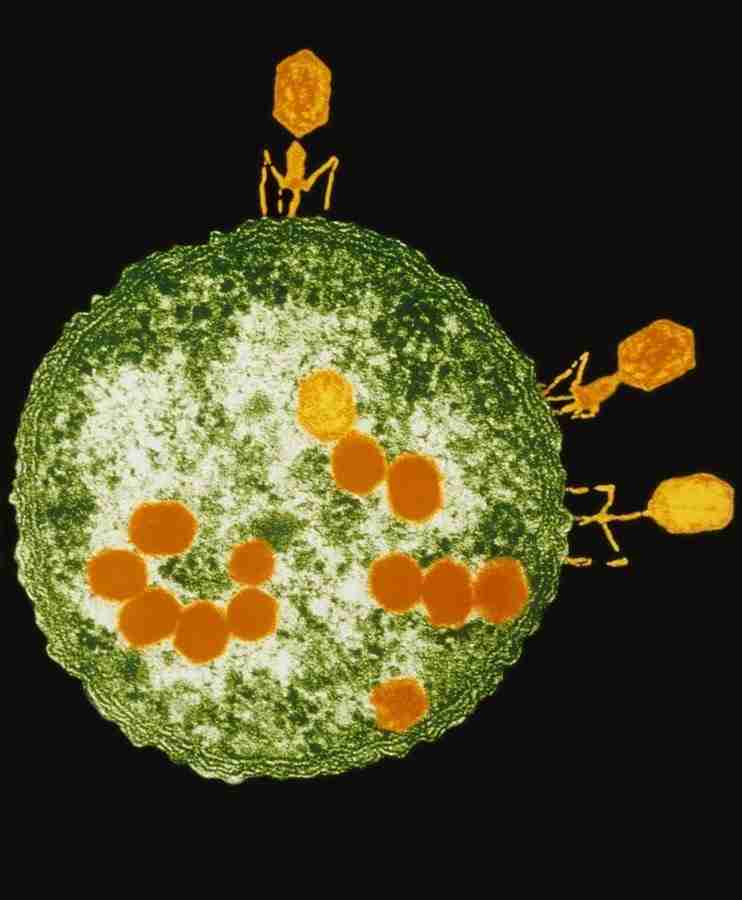
What do viruses need to reproduce?
-
0%
they need genetic material
-
0%
They need a host cell
-
0%
They need bacteria
-
0%
They need insulin
Q.7.
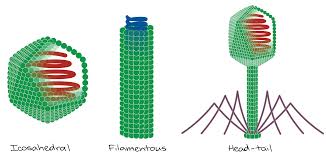
What do viruses have in common with living cells? They both...
-
0%
store genetic information
-
0%
have chloroplasts
-
0%
use glucose for cellular respiration
-
0%
have endoplasmic reticulum
Q.8.
Organisms living in saline areas will be called
-
0%
heliophytes
-
0%
halophiles
-
0%
methanogens
-
0%
thermoacidophiles
Q.9.
Contagium vivum fluidum was proposed by
-
0%
Ivanowsky
-
0%
Beijerinck
-
0%
Stanley
-
0%
Robert Hook
Q.10.
Which of the following organism is not an eukaryote?
-
0%
Paramoecium
-
0%
Euglena
-
0%
Escherichia
-
0%
Amoeba
Q.11.
The envelope of a virus is called
-
0%
core
-
0%
virion
-
0%
capsid
-
0%
cell envelope
Q.12.
The imperfect fungi which are decomposers of litter and help in mineral cycling belong to
-
0%
Ascomycetes
-
0%
Deuteromycetes
-
0%
Basidiomycetes
-
0%
Phycomycetes
Q.13.
Viroids differ from viruses in having
-
0%
DNA molecules with protein coat
-
0%
DNA molecules without protein coat
-
0%
RNA molecules with protein coat
-
0%
RNA molecules without protein coat
Q.14.
Methanogens belong to
-
0%
eubacteria
-
0%
archaebacteria
-
0%
dinoflagellates
-
0%
slime moulds
Q.15.
Which of the following is not a kingdom in Copeland’s Four Kingdom Classification?
-
0%
Monera
-
0%
Protista
-
0%
Fungi
-
0%
Animalia
Q.16.
Which of the following is not common characteristics of plants and animals in Five kingdom classificationi) Eukaryotic cell typeii) Presence of Cell walliii) Presence of Organ system iv) Presence of Nuclear membraneChose the correct combination from below options
-
0%
i) and ii)
-
0%
ii) and iv)
-
0%
i) and iii)
-
0%
ii) and iii)
Q.17.
The Two Kingdom Classification was found to have certain drawbacks for which other classifications emerged later. Which one of the following was not a drawback of the two kingdom classification?
-
0%
Grouping of prokaryotes and eukaryotes together
-
0%
Cyanobacteria was placed under plant kingdom
-
0%
organism having cell wall separated from organism lacking cell wall
-
0%
Unicellular amd multicellular organisms were not separated
Q.18.
Which statement about Three kingdom classification is not True?
-
0%
It was proposed by E. Haeckel
-
0%
A new kingdom Monera was introduced
-
0%
The kingdom included unicellular animals, algae and fungi
-
0%
Organisms do not have tissue level organisation
Q.19.
Which one of the following statements is true about the Four Kingdom classification?
-
0%
It was proposed by E. Haeckel
-
0%
A new kingdom called Monera was created
-
0%
The new kingdom included all unicellular prokaryotic and eukaryotic organisms
-
0%
The four kingdoms are Animalia, Plantae, Fungi & Protista
Q.20.
Which of the following is NOT a drawback / demerit of the 5 Kingdom classification?
-
0%
Not including Viruses in any of the kingdoms
-
0%
Keeping Slime moulds under Protista
-
0%
Classification is Phylogenetic
-
0%
Heterogenocity in Kingdom Protista