Q.1.
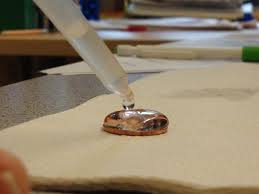
The attraction that causes water and other liquids to form drops is called ________________. This is also water’s ability to be attracted to other water molecules.
-
25%
adhesion
-
25%
capillary action
-
50%
cohesion
-
0%
surface tension
Q.2.
Water is a ____________________________ .
-
25%
mixture
-
25%
atom
-
50%
compound
-
0%
solid
Q.3.
Water molecule is made of ___________ of hydrogen and __________________ atom of oxygen.
-
33%
one , two
-
0%
three , two
-
67%
two , one
-
0%
two , two
Q.4.
Sublimation is a process of changes in the state of matter from ___________________________________________
-
50%
gas to solid
-
25%
solid to liquid
-
25%
liquid to gas
-
0%
gas to liquid
Q.5.
These two processes absorbs heat energy during the changes in the state of matter.
-
25%
freezing and evaporation
-
25%
evaporation and condensation
-
0%
boiling and melting
-
50%
freezing and condensation
Q.6.
During electrolysis the ___________________ gas is produced at the anode
-
50%
oxygen
-
50%
hydrogen
Q.7.
The impurities such salt when added to water will _______________ the freezing point of water.
-
100%
increase
-
0%
remain the same
-
0%
decrease
Q.8.
Evaporation only occurs on the ___________________ of water
-
0%
bottom
-
0%
surface
-
100%
boiling point
Q.9.
When we add salt into pure water, the boiling point of the solution will
-
50%
be more than the pure water boiling point.
-
50%
be less than the pure water boiling point.
-
0%
same as the pure water boiling point.
Q.10.
Insects like daddy longlegs can move on the surface of the water because of
-
0%
water has higher density than insects.
-
33%
water is heavier than the insects.
-
67%
water has high surface tension.
Q.11.
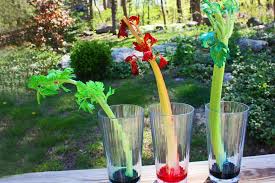
What is the name of the phenomenon than make the water moves from the bottom to the leaves?
-
50%
Conduction action
-
0%
Capillary action
-
50%
Transpiration
-
0%
Translation
Q.12.
During electrolysis, the gas produced at anode is
-
0%
hydrogen
-
0%
nitrogen
-
0%
chlorine
-
100%
oxygen
Q.13.
When a lighted wooden splint is put a the mouth of the test tube containing this gas, a 'pop' sound is heard. What is the gas name?
-
100%
hydrogen
-
0%
nitrogen
-
0%
chlorine
-
0%
oxygen
Q.14.
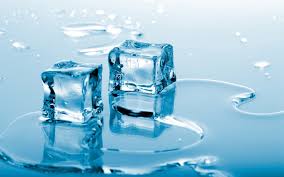
The melting point of pure water is ................. °\degree° C
-
0%
-2
-
100%
0
-
0%
2
-
0%
100
Q.15.
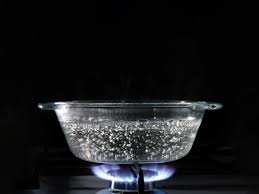
The boiling point of pure water is .............. °\degree° C
-
33%
100
-
67%
102
-
0%
0
-
0%
-2
Q.16.
The process of ice cube changes into water is know as ...................
-
100%
melting
-
0%
condensation
-
0%
boiling
-
0%
sublimation
Q.17.
This process involved the release of high amount of heat energy from water and makes the water molecules to become closer to each other in fixed position.
-
0%
Melting
-
67%
Freezing
-
33%
Boiling
-
0%
Condensation
Q.18.
The process involved in the changes of ice cube into water vapour or vice verse.
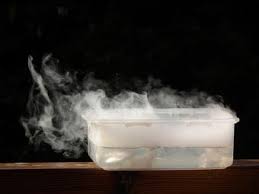
-
33%
Condensation
-
67%
Sublimation
-
0%
Freezing
-
0%
Melting