Q.1.
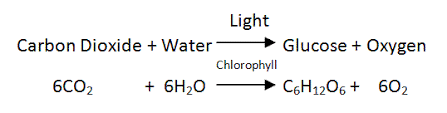
The reactants needed for photosynthesis to occur are:
-
0%
carbon dioxide & water
-
100%
carbon dioxide & oxygen
-
0%
oxygen & water
-
0%
carbon dioxide, oxygen & water
Q.2.
The role of the guard cell is to
-
0%
help control the temperature of the plant
-
100%
control how much water enters the leaf
-
0%
control how much glucose is stored
-
0%
control the movement of water vapour & gases
Q.3.
Plants need to take in oxygen gas for respiration
-
0%
only at night
-
100%
only during the day
-
0%
both during the day & the night
Q.4.
Transpiration helps the plant
-
0%
make more sugars at night
-
0%
move water from the roots to the stem and leaves
-
100%
move sugars from the leaf to be stored in the stem & roots
-
0%
make more chloroplasts
Q.5.
Water & soluble nutrients move through the plant in
-
0%
the phloem cells
-
100%
the xylem cells
-
0%
the root hair cells
-
0%
palisade mesophyll layer
Q.6.
Sugar and the products of photosynthesis move through the plant in
-
0%
the phloem cells
-
0%
the xylem cells
-
100%
the root hair cells
-
0%
palisade mesophyll layer
Q.7.
The leaf has a shiny, waxy cuticle around it to
-
0%
increase the rate of photosynthesis
-
100%
attract more light
-
0%
control water loss
-
0%
stop carbon dioxide and oxygen gases escaping
Q.8.
Most of the chloroplast cells are found in the
-
0%
upper epidermis
-
0%
pallisade mesophyll layer
-
100%
lower epidermis
-
0%
stomata
Q.9.
The water needed for photosynthesis comes into the leaves through the
-
0%
upper epidermis
-
0%
stomata
-
100%
guard cells
-
0%
xylem cells
Q.10.
The important gases, carbon dioxide and oxygen, enter and leave the leaf through the
-
0%
upper epidermis
-
100%
phloem
-
0%
stomata
-
0%
guard cells
Q.11.
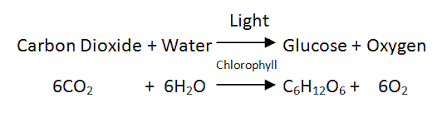
The reactants needed for photosynthesis to occur are:
-
0%
carbon dioxide & water
-
0%
carbon dioxide & oxygen
-
0%
oxygen & water
-
100%
carbon dioxide, oxygen & water
Q.12.
Which structures open and close stomata to allow gas exchange but prevent water loss in leaves?
-
0%
Epidermis
-
0%
Vascular tissue
-
0%
Guard cells
-
100%
Spongy mesophyll
Q.13.
Plants make food through photosynthesis
-
100%
True
-
0%
False
Q.14.
Using their __________, plants combine sunlight, carbon dioxide and water to make glucose and oxygen
-
0%
Flowers
-
100%
Leaves
-
0%
Stem
-
0%
Roots
Q.15.
There are little pores on the bottom of the leaf called ________
-
0%
stem
-
0%
root
-
100%
stomata
-
0%
palisade mesophyll
Q.16.
'___________' comes into the plant through the roots
-
0%
Oxygen
-
0%
Water
-
0%
Carbon Dioxide
-
100%
Goku
Q.17.
What is the function of the leaf on the plant?
-
0%
Absorbs water
-
100%
Absorbs Nutrients
-
0%
Photosynthesis
-
0%
Anchors the plant
Q.18.
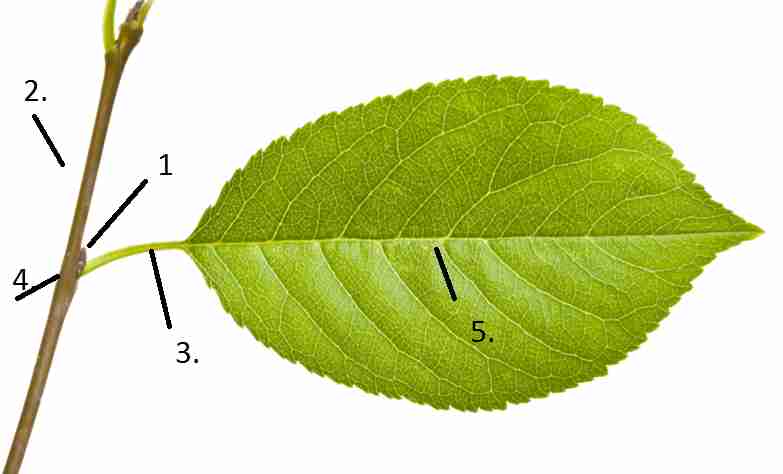
Number 3 is...
-
0%
Node
-
0%
Internode
-
100%
Petiole
-
0%
Axillary Bud
Q.19.
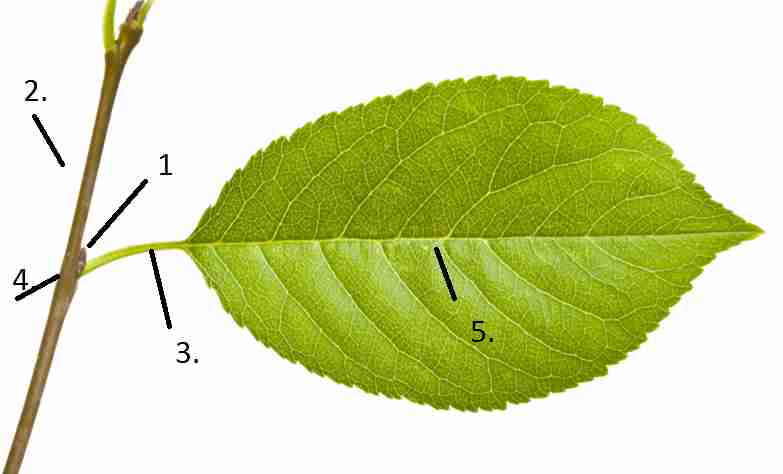
Number 5 is...
-
0%
Blade
-
0%
Margin
-
0%
Midrib
-
100%
Serrate
Q.20.
Why are plants important for all other living organisms?
-
0%
They are important for making our environment look attractive.
-
0%
They are important predators for other organisms.
-
100%
They are important consumers of other organisms.
-
0%
Without them, food chains would fail as plants are the producers.
Q.21.
Why do leaves need a large surface area?
-
0%
To absorb as much water as possible.
-
0%
To absorb as much sunlight as possible.
-
0%
To absorb as much food as possible.
-
100%
To absorb as much chlorophyll as possible.
Q.22.
What is the function of the midrib?
-
0%
It provides strength throughout the leaf, keeping it upright and sturdy in the wind.
-
0%
It provides sunlight to the leaf for it to carry out photosynthesis.
-
100%
It attaches the leaf to the plant’s stem.
-
0%
It is tiny openings or pores, which allow carbon dioxide to enter and oxygen to exit the leaf.
Q.23.
What is the function of the petiole?
-
0%
It provides strength throughout the leaf, keeping it upright and sturdy in the wind.
-
0%
It provides sunlight to the leaf for it to carry out photosynthesis.
-
100%
It attaches the leaf to the plant’s stem.
-
0%
It is tiny openings or pores, which allow carbon dioxide to enter and oxygen to exit the leaf.
Q.24.
What is the function of the stomata?
-
100%
It provides strength throughout the leaf, keeping it upright and sturdy in the wind.
-
0%
It provides sunlight to the leaf for it to carry out photosynthesis.
-
0%
It attaches the leaf to the plant’s stem.
-
0%
They are is tiny openings or pores, which allow carbon dioxide to enter and oxygen to exit the leaf.
Q.25.
Why are leaves thin?
-
0%
To allow as much water as possible into the leaf.
-
0%
To minimise the distance for carbon dioxide to travel into leaf cells.
-
0%
To allow as much water as possible out of the leaf.
-
100%
To allow as much sunlight as possible to hit the leaf surface.