Q.1.
Find all values of parameter $$a$$ for which the quadratic equation $$ \left( a+1 \right) { x }^{ 2 }+2\left( a+1 \right) x+a-2=0 $$ has two distinct roots.
-
0%
$$a \in (-1,\infty)$$
-
0%
$$a \in (-\infty,-1)$$
-
0%
$$a \in (-1,1)$$
-
0%
$$a \in (-\infty,\infty)$$
Q.2.
Find the discriminant for the given quadratic equation:
$$x^2\,+\,x\,+\,1\,=\,0$$
-
0%
$$-3$$
-
0%
$$-5$$
-
0%
$$-7$$
-
0%
$$-9$$
Q.3.
If $$D$$ is the discriminant of $$x^2\,+\,4x\,+\,1\,=\,0$$, then the value of $$D^2$$, is
-
0%
$$100$$
-
0%
$$12$$
-
100%
$$144$$
-
0%
$$10$$
Q.4.
Find $$m$$, if the quadratic equation $$(m\, -\, 1)\, x^{2}\, -\, 2\, (m\, -\, 1)\, x\, +\, 1\, =\, 0$$ has real equal roots.
-
0%
$$1$$
-
0%
$$2$$
-
0%
$$3$$
-
0%
$$4$$
Q.5.
Find c, if the quadratic equation $$x^{2}\, -\, 2\, (c\, +\, 1)\, x\, +\, c^{2}\, =\, 0 $$ has real and equal roots.
-
0%
$$c=\cfrac{1}{2}$$
-
0%
$$c=-\cfrac{1}{2}$$
-
0%
$$c=2$$
-
0%
$$c=-2$$
Q.6.
Find the value of discriminant for the following equation.
$$4x^{2}\, -\, kx\, +\, 2\, =\, 0$$
-
0%
$$\Delta\, =\, k^{2}\, -16$$
-
0%
$$\Delta\, =\, k^{2}\, + 32$$
-
0%
$$\Delta\, =\, k^{2}\, -32$$
-
0%
$$\Delta\, =\, k^{2}\,+16$$
Q.7.
Solve the equation using formula.
$$2x^{2}\, +\, \displaystyle \frac{x\, -\, 1}{5}\, =\, 0$$
-
0%
$$x\, =\, \displaystyle \frac{-1\, \pm\, \sqrt{10}}{4}$$
-
0%
$$x\, =\, \displaystyle \frac{-1\, \pm\, \sqrt{41}}{20}$$
-
0%
$$x\, =\, \displaystyle \frac{1\, \pm\, \sqrt{41}}{20}$$
-
0%
$$x\, =\, \displaystyle \frac{1\, \pm\, \sqrt{10}}{4}$$
Q.8.
Which constant should be added and subtracted to solve the quadratic equation $$4{ x }^{ 2 }-\sqrt { 3 } x-5=0$$ by the method of completing the square?
-
0%
$$\displaystyle\frac{9}{10}$$
-
0%
$$\displaystyle\frac{3}{16}$$
-
0%
$$\displaystyle\frac{3}{4}$$
-
0%
$$\displaystyle\frac{\sqrt{3}}{4}$$
Q.9.
If $${b}^{2} -4ac\ge 0$$ then the roots of quadratic equation $$a{x}^{2} + bx + c =0$$ is-
-
0%
$$\displaystyle\frac{b}{2a}\pm \frac{\sqrt{{b}^{2}-4ac}}{2a}$$
-
0%
$$\displaystyle -\frac{b}{2a}\pm \frac{\sqrt{{b}^{2}+4ac}}{2a}$$
-
0%
$$\displaystyle\frac{b}{2a}\pm \frac{\sqrt{{b}^{2}+4ac}}{2a}$$
-
0%
$$\displaystyle -\frac{b}{2a}\pm \frac{\sqrt{{b}^{2}-4ac}}{2a}$$
Q.10.
State true or false:
If $$5m^{2}\, +\, m\, =\, 3$$, then $$m\, =\, \displaystyle \frac{-1\, \pm\, \sqrt{61}}{10}$$.
-
0%
True
-
0%
False
Q.11.
The value of $$p$$ for which the equation $$x^2+4=(P+2)x $$ has equal roots?
-
0%
$$2,-6$$
-
0%
$$-2, 6$$
-
0%
$$-2,-6$$
-
0%
$$2,6$$
Q.12.
Solve the following quadratic equation by completing square method.
$$3p^{2}\, +\, 4\, =\, -7p$$.
-
0%
$$-1$$
-
0%
$$\displaystyle -\dfrac{4}{3}$$
-
0%
$$2$$
-
0%
$$3$$
Q.13.
Solve the following quadratic equation by completing square.
$$2y^{2}\, +\, 5y\, +\, 1\, =\, 0$$, then $$y\, =\, \displaystyle \frac{-5\, \pm\, \sqrt{23}}{2}$$. State true or false.
-
0%
True
-
0%
False
Q.14.
Consider the quadratic equations $$\displaystyle ax^{2}+2bx+c=0$$ and $$\displaystyle \left ( a+c \right )\left ( ax^{2}+2bx+c \right )-2\left ( ac-b^{2} \right )\left ( x^{2}+1 \right )=0$$ If the roots of one are real (complex) then the roots of the other are complex (real.)
-
0%
True
-
0%
False
Q.15.
The ratio of the roots of the equation $$a{ x }^{ 2 }+bx+c=0$$ is same as the ratio of the roots of the equation $$p{ x }^{ 2 }+qx+r=0$$. If $${ D }_{ 1 }$$ and $${ D }_{ 2 }$$ are the discriminants of $$a{ x }^{ 2 }+bx+c=0$$ and $$p{ x }^{ 2 }+qx+r=0$$ respectively, then $${ D }_{ 1 }:{ D }_{ 2 }$$ is equal to
-
0%
$$\displaystyle \frac { { a }^{ 2 } }{ { p }^{ 2 } } $$
-
0%
$$\displaystyle \frac { { b }^{ 2 } }{ { q }^{ 2 } } $$
-
0%
$$\displaystyle \frac { { c }^{ 2 } }{ { r }^{ 2 } } $$
-
0%
None of these
Q.16.
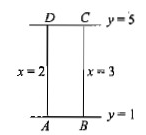
The equations to a pair of opposite sides of a parallelogram are $$\displaystyle x^{2}-5x+6=0 \ and \ y^{2}-6y+5=0$$ the equation of a diagonal can be
-
0%
$$\displaystyle x+4y=13$$
-
0%
$$\displaystyle 4x+y=13$$
-
0%
$$\displaystyle y=4x-7 $$
-
0%
$$\displaystyle y=4x+7 $$
Explanation
Q.17.
Find the roots of each of the following quadratic equations by the method of completing the squares
$$2x^2 - 5x + 3 = 0$$
$$2x^2 - 5x + 3 = 0$$
-
0%
$$x=2,\,\,x=-7$$
-
0%
$$x=-1,\,\,x=3$$
-
0%
$$x=\displaystyle 1,x= \frac{3}{2}$$
-
0%
$$x=\displaystyle 1, x=\frac{1}{2}$$
Q.18.
Find the solutions of $$3x^2 - 2\sqrt 6x + 2 = 0$$ by the method of completing the squares when $$x$$ is an irrational number.
-
0%
$$x=\pm\sqrt{\dfrac{7}{2}}$$
-
0%
$$x=\pm\sqrt{\dfrac{2}{3}}$$
-
0%
$$x=\sqrt{\dfrac{2}{3}}$$
-
0%
$$x=\sqrt{\dfrac{7}{2}}$$
Q.19.
Find $$x$$ by solving the given equation:
$$\displaystyle \frac{x + 3}{x + 2} = \frac{3x - 7}{2x - 3}$$
-
0%
$$5,-1$$
-
0%
$$-5,-1$$
-
0%
$$5,1$$
-
0%
$$-5,1$$
Q.20.
Solve for $$y$$: $$ \sqrt 7 y^2 - 6y - 13 \sqrt 7 = 0$$
-
0%
$$\sqrt 7, 2 \sqrt 7$$
-
0%
$$\displaystyle 3, \frac{2}{\sqrt 7}$$
-
0%
$$\displaystyle \frac{13}{\sqrt 7}, -\sqrt 7$$
-
0%
None of these
Q.21.
Find the roots of each of the following quadratic equations by the method of completing the sqaures:
$$x^2 - 6x + 4 = 0$$
$$x^2 - 6x + 4 = 0$$
-
0%
$$ 9\pm \sqrt 8$$
-
0%
$$6 \pm \sqrt 7$$
-
0%
$$3 \pm \sqrt 5$$
-
0%
$$ 1\pm \sqrt 11$$
Q.22.
Find the roots of the following quadratic equation by using the quadratic formula
$$2x^2 - 2\sqrt 2x + 1 = 0$$
$$2x^2 - 2\sqrt 2x + 1 = 0$$
-
0%
$$\displaystyle -\frac{1}{\sqrt 2}, \frac{1}{\sqrt{2}}$$
-
0%
$$\displaystyle \frac{1}{\sqrt 2}, \frac{1}{\sqrt{2}}$$.
-
0%
$$\displaystyle -\frac{1}{ 2}, \frac{1}{{2}}$$
-
0%
None of these
Q.23.
Determine the value of $$k$$ for which the quadratic equation $$4x^2 - 3kx + 1 = 0$$ has equal roots.
-
0%
$$\displaystyle \pm \frac{2}{3} $$
-
0%
$$\displaystyle \pm \frac{4}{3} $$
-
0%
$$\displaystyle \pm 4$$
-
0%
$$\displaystyle \pm 6$$
Q.24.
Find the roots of the following quadratic equation by using the quadratic formula
$$x^2 - 16x + 64 = 0$$
$$x^2 - 16x + 64 = 0$$
-
0%
$$-8,-8$$
-
0%
$$8,8$$
-
0%
$$16,16$$
-
0%
$$-16,-16$$
Q.25.
Find the solutions of $$3x^2 - 2\sqrt 6x + 2 = 0$$ by the method of completing the squares when $$x$$ is a real number.
-
0%
$$x=\displaystyle- \sqrt{\frac{2}{3}}$$
-
0%
$$x=\displaystyle \pm \sqrt{\frac{2}{3}}$$
-
0%
Cannot be determined
-
0%
None of these
Q.26.
Determine k such that the quadratic equation $$x^2 + 7(3 + 2k)+(1 + 3k)x = 0$$ has equal roots
-
0%
$$2, 7$$
-
0%
$$7, 5$$
-
0%
$$2, $$ $$\displaystyle - \frac{10}{9}$$
-
0%
None of these
Q.27.
Find the roots of the following quadratic equations by using the quadratic formula
$$\displaystyle \frac{x}{x - 1} + \frac{x - 1}{x} = 4, x \neq 0, 1$$
$$\displaystyle \frac{x}{x - 1} + \frac{x - 1}{x} = 4, x \neq 0, 1$$
-
0%
$$\displaystyle \frac{2 \pm \sqrt 3}{4}$$
-
0%
$$\displaystyle \frac{-1 \pm \sqrt 3}{2}$$
-
0%
$$\displaystyle \frac{1 \pm \sqrt 3}{1}$$
-
0%
$$\displaystyle \frac{-2 \pm \sqrt 3}{4}$$
Q.28.
Find the roots of the following quadratic equations by using the quadratic formula
$$(x^2 - 2x)^2 - 4(x^2 - 2x) + 3= 0$$
$$(x^2 - 2x)^2 - 4(x^2 - 2x) + 3= 0$$
-
0%
$$-1, 3, 1\pm \sqrt{2}$$
-
0%
$$1, 3, -1\pm \sqrt{2}$$
-
0%
$$1, 3, 1\pm \sqrt{2}$$
-
0%
None of these
Q.29.
Find the roots of the following quadratic equation by using the quadratic formula
$$\displaystyle x + \frac{1}{x} = 3, x \neq 0$$
$$\displaystyle x + \frac{1}{x} = 3, x \neq 0$$
-
0%
$$\displaystyle \frac{3 \pm \sqrt {13}}{2}$$
-
0%
$$\displaystyle \frac{3 \pm \sqrt 5}{2}$$
-
0%
$$\displaystyle \frac{-3 + \sqrt 5}{2}$$
-
0%
$$\displaystyle \frac{-3 \pm \sqrt {13}}{2}$$
Q.30.
Find the roots of the following quadratic equations by using the quadratic formula
$$\displaystyle \frac{x - 3}{x + 3} - \frac{x + 3}{x - 3} = 6\frac{6}{7}, x \neq - 3, 3$$
$$\displaystyle \frac{x - 3}{x + 3} - \frac{x + 3}{x - 3} = 6\frac{6}{7}, x \neq - 3, 3$$
-
0%
$$4,\displaystyle \frac{9}{4}$$
-
0%
$$-4,\displaystyle \frac{4}{9}$$
-
0%
$$-4,-\displaystyle \frac{4}{9}$$
-
0%
$$-4,\displaystyle \frac{9}{4}$$