Q.1.
Select the odd one out w.r.t. transparency (wood, stone, cement, glass)
-
100%
glass
-
0%
wood
-
0%
stone
-
0%
cement
Q.2.
State whether true or false.
A dark patch formed behind an opaque body when the opaque body is placed in the path of a light beam is called an image.
-
0%
True
-
100%
False
Q.3.
Butter paper is an example for __________ object.
-
0%
A transparent
-
100%
A translucent
-
0%
An opaque
-
0%
A luminous
Q.4.
Shadow formation is an example of :
-
92%
rectilinear propagation of light
-
0%
curvilinear propagation of light
-
8%
dispersion of light
-
0%
none of these
Q.5.
State whether true or false:
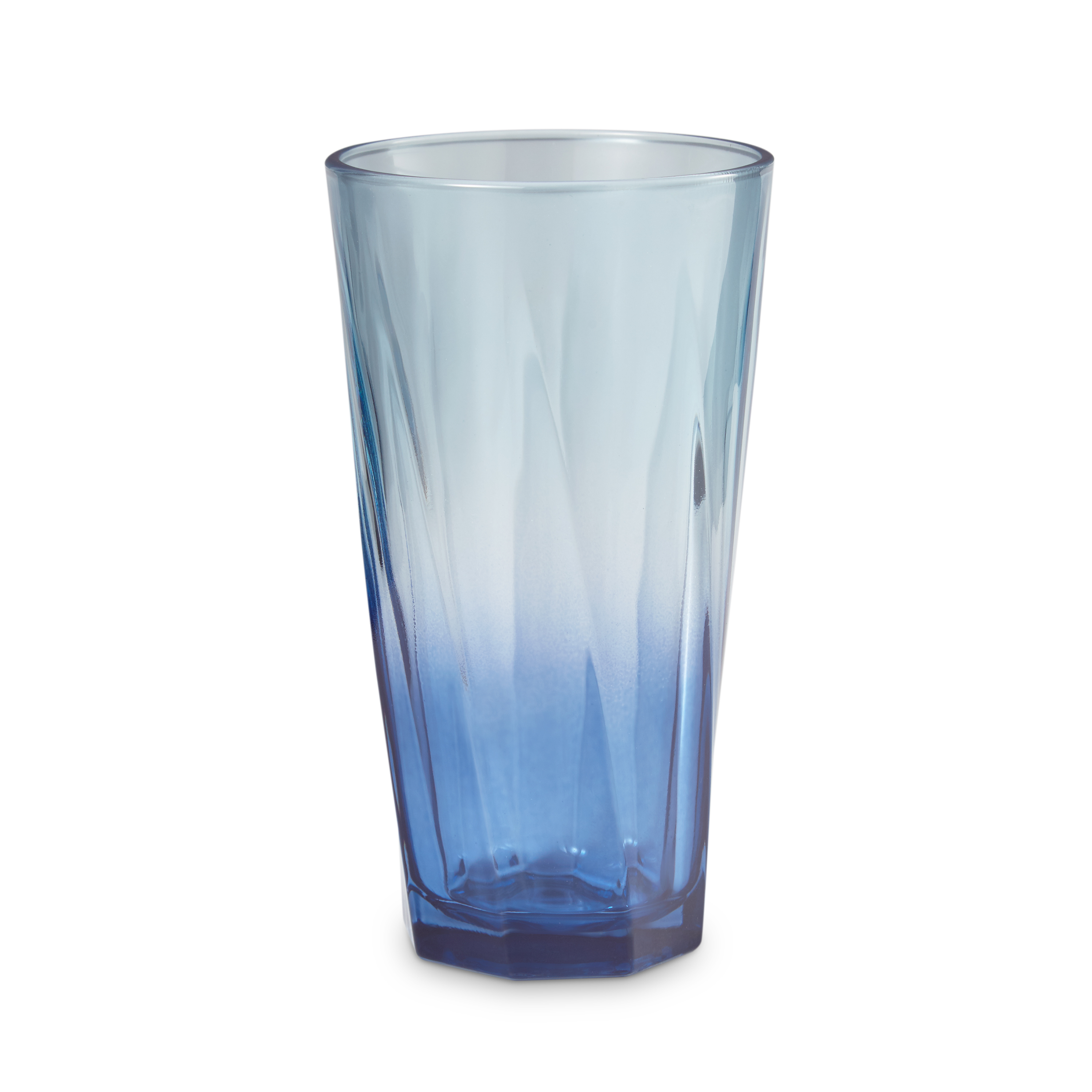
You can clearly see through a blue-tinted drinking glass.
-
14%
True
-
86%
False
Explanation
Q.6.
Which objects use the reflection of light?
-
0%
Side mirror of a car
-
0%
Periscope
-
17%
Mirror
-
83%
All of the above
Q.7.
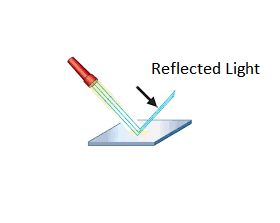
Incident ray is the ray of light striking a surface.
-
80%
True
-
20%
False
Q.8.
Incident light falling on a surface is sent back into the same medium. This phenomenon is known as
-
0%
Dispersion
-
100%
Reflection
-
0%
Refraction
-
0%
Polarization
Explanation
Q.9.
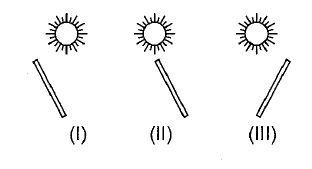
Three sticks are placed in an open field as shown in figure. Which of the following sticks will form the shadow of equal length?
-
0%
Only sticks (I) and (II)
-
0%
Only sticks (II) and (III)
-
60%
Only sticks (I) and (III)
-
40%
All sticks (I), (II) and (III).
Q.10.
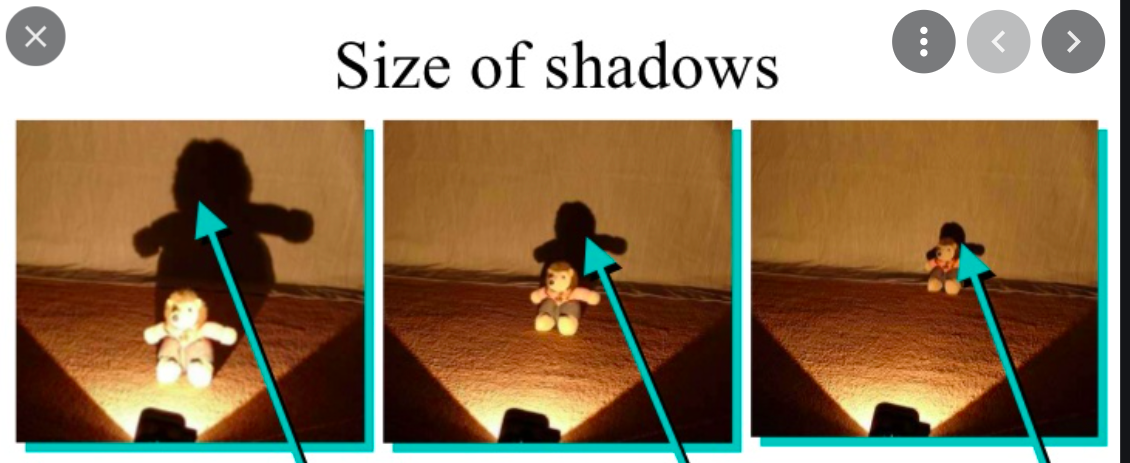
You have to cast the shadow of your pencil on the wall with the help of candle in a dark room. How can you obtain a shadow smaller in size than the pencil?
[You cannot use mirrors or lenses and assume the candle to be a point source of light]
-
80%
Keep the pencil close to the wall
-
0%
Bring the pencil closer to the candle
-
20%
Keep the pencil midway between the candle and the wall
-
0%
You cannot obtain a shadow smaller than the size of the pencil
Explanation
Q.11.
The pinhole camera works on the principle of
-
0%
Reflection of light.
-
0%
Refraction of light.
-
75%
Rectilinear propagation of light.
-
25%
Both A and B.
Q.12.
The given image shows the working of which optical instrument ?
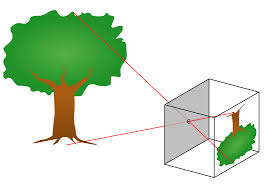
-
0%
Telescope
-
0%
Microscope
-
100%
Pinhole Camera
-
0%
Periscope
Q.13.
Geeta placed three objects made of different materials as shown in the figure. She observed a bright spot of light at (II) but (III) would not get any spot. Then,
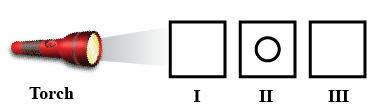
-
25%
(I) and (ll) are made of transparent materials and (III) is made of opaque material.
-
0%
(I) is made of transparent material, (II) is made of translucent material and (III) is made of opaque material.
-
25%
(I) is made of transparent material, (II) is made of opaque material and (III) is made of either transparent or opaque or translucent material.
-
50%
(I) and (II) are made of opaque material and (III) is made of transparent material.
Q.14.
The color of the shadow of Green ball is:
-
0%
Red
-
100%
Black
-
0%
Blue
-
0%
Green
Q.15.
Read the given statements and select the correct option.
Statement 1: Rahul placed a colored plastic bottle in front of the beam of a torchlight. Then he placed a transparent sheet of the same size on the other side of the bottle. No shadow will form on the screen.
Statement 2: Translucent objects allow light to pass through them partially.
Statement 1: Rahul placed a colored plastic bottle in front of the beam of a torchlight. Then he placed a transparent sheet of the same size on the other side of the bottle. No shadow will form on the screen.
Statement 2: Translucent objects allow light to pass through them partially.
-
0%
Both statement 1 and statement 2 are true and statement 2 is the correct explanation of statement 1
-
100%
Both statement 1 and statement 2 are true but statement 2 is not the correct explanation of statement 1
-
0%
Statement 1 is true but statement 2 is false
-
0%
Statement 1 is false but statement 2 is true
Q.16.
Which diagram best shows the reflection of light?
-
0%
-
0%
-
100%
-
0%
Q.17.
In the pinhole camera, the light rays from the source are moving through the pinhole and incident on the white screen. This is due to :
-
100%
the property of light called "rectilinear propagation of light"
-
0%
the property of light called "interference of light"
-
0%
the property of light called "diffraction"
-
0%
the property of light called "dispersion"
Q.18.
The reflection that occurs when a beam of light falls on a smooth surface is called irregular reflection.
-
0%
True
-
100%
False
Q.19.
When Abhishek looked at a lighted torch through an object he could see a faint glow, but not the torch. The object is
-
0%
Transparent
-
0%
Opaque
-
100%
Translucent
-
0%
None of these
Q.20.
Which surface will reflect most of the light falling on them ?
-
0%
Rough surface
-
0%
Shining surface
-
0%
Smooth surface
-
0%
Opaque surface
Q.21.
Which of the following is a translucent object?
-
0%
Glass
-
0%
Water
-
0%
Butter paper
-
0%
Iron sheet
Q.22.
Which of the following can never form a circular shadow?
-
0%
A ball
-
0%
A flat disc
-
0%
A shoe box
-
0%
An ice cream cone
Q.23.
The phenomenon related to the reflection of light is
-
0%
Image of the sun visible on the surface of water
-
0%
Reddish colour of the sky during evening
-
0%
Sun is visible two minutes before the actual sun rise.
-
0%
Green house effect caused by the radiation of the sun
Q.24.
Which stick is likely to form the $$SHORTEST$$ shadow on the ground?
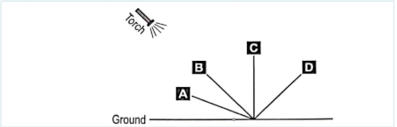
-
0%
$$A$$
-
0%
$$B$$
-
0%
$$C$$
-
0%
$$D$$
Q.25.
A student observes a tree given in Fig. through a pinhole camera. Which of the diagrams given in Fig. (a) to (d) depicts the image seen by her correctly?
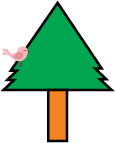
-
0%
-
0%
-
0%
-
0%
Q.26.
Which of the following is/are not always necessary to observe a shadow?
-
0%
Sun
-
0%
Screen
-
0%
Source of light
-
0%
Opaque object
Q.27.
Write true or false for statement
Light passes through glass.
Light passes through glass.
-
0%
True
-
0%
False
Q.28.
If we are able to see anything clearly through an object, then such an object is said to be a ________ object
-
0%
Transparent
-
0%
Translucent
-
0%
Opaque
-
0%
None of these
Q.29.
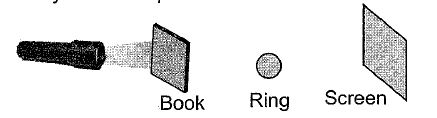
Study the set-up below. How will the shadow look like?
-
0%
-
0%
-
0%
-
0%
Q.30.
A man of height h walking away from a lamp post finds his shadow to be equal to his height when he is at a distance x from the lamp post. If the height of the lamp post is H, then x is
-
0%
H + h
-
0%
H - h
-
0%
H.h
-
0%
H/h